Home
Research in Electrochemistry and Neuroscience
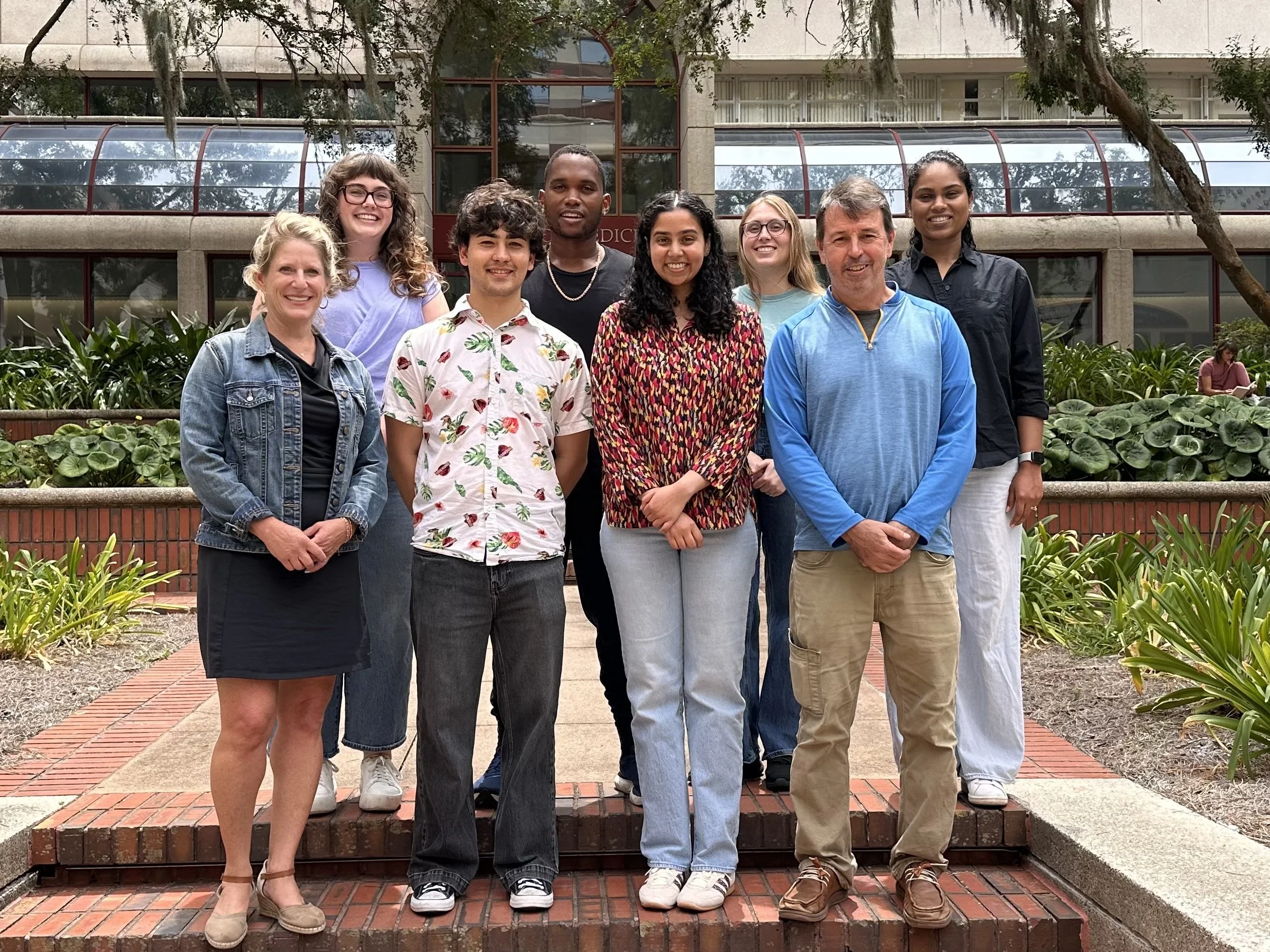
The Sombers lab as of late 2025, standing in the College of Medicine courtyard. Front row: left, Dr. Sombers. Middle, Kayleigh Linder. Right, Dr. McCarty. Back row: left, Kalynn Turner. Middle, Dr. Todorov. Right, Benjamin Melluso.
The Sombers lab as of early 2025 standing in front of a University of Florida sign. Individuals from the left; Dr. Berger, Dr. Todorov, Kalynn Turner, Kayleigh Linder, Benjamin Melluso, Eva McCarty, Dr. McCarty, Juliette McCarty, Dr. Sombers.
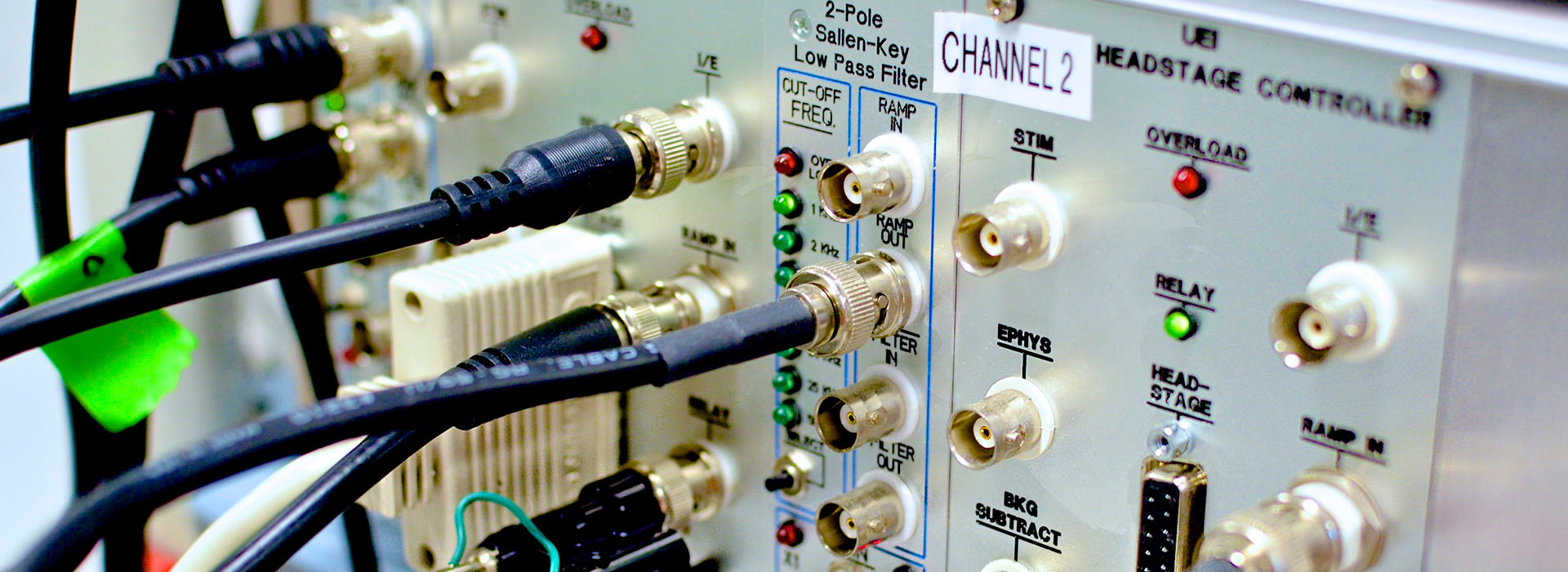
The back of a potentiostat. There are many circular electrical connections, many of which have cables attached which trail off of the left side of the picture.
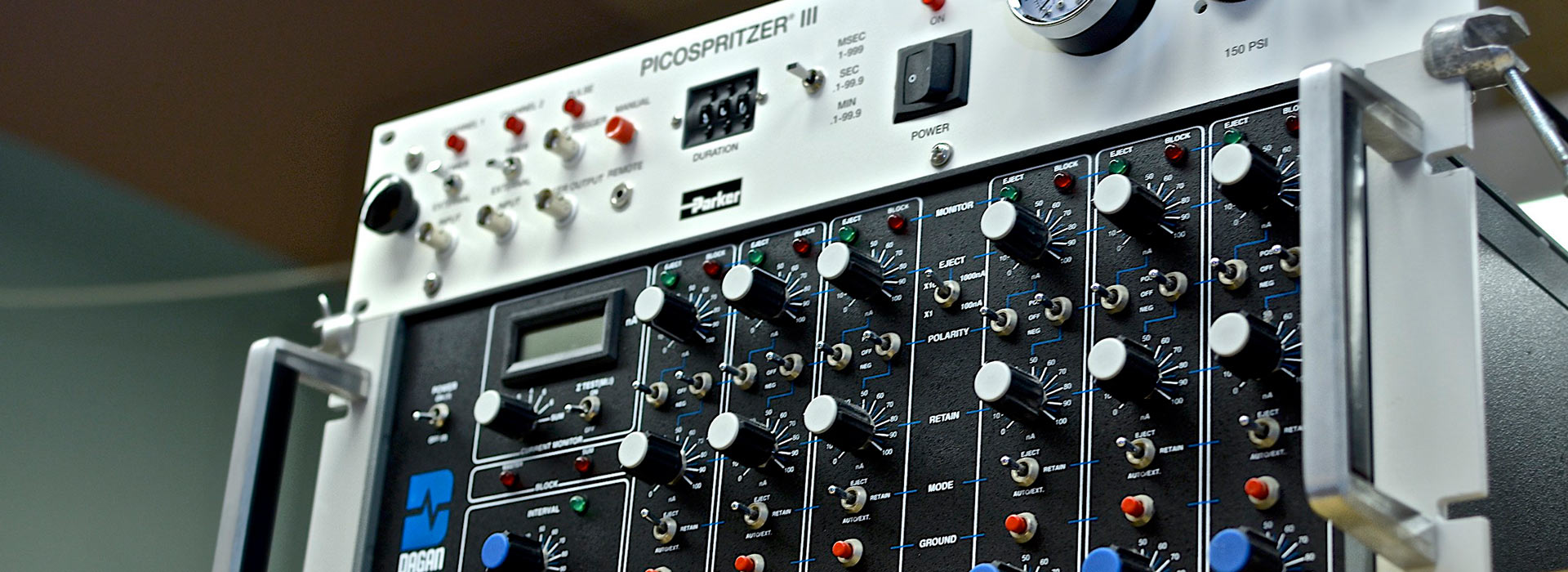
The front of a picospritzer III. It is unplugged. There is an array of dials, each with adjacent switches and LEDs.
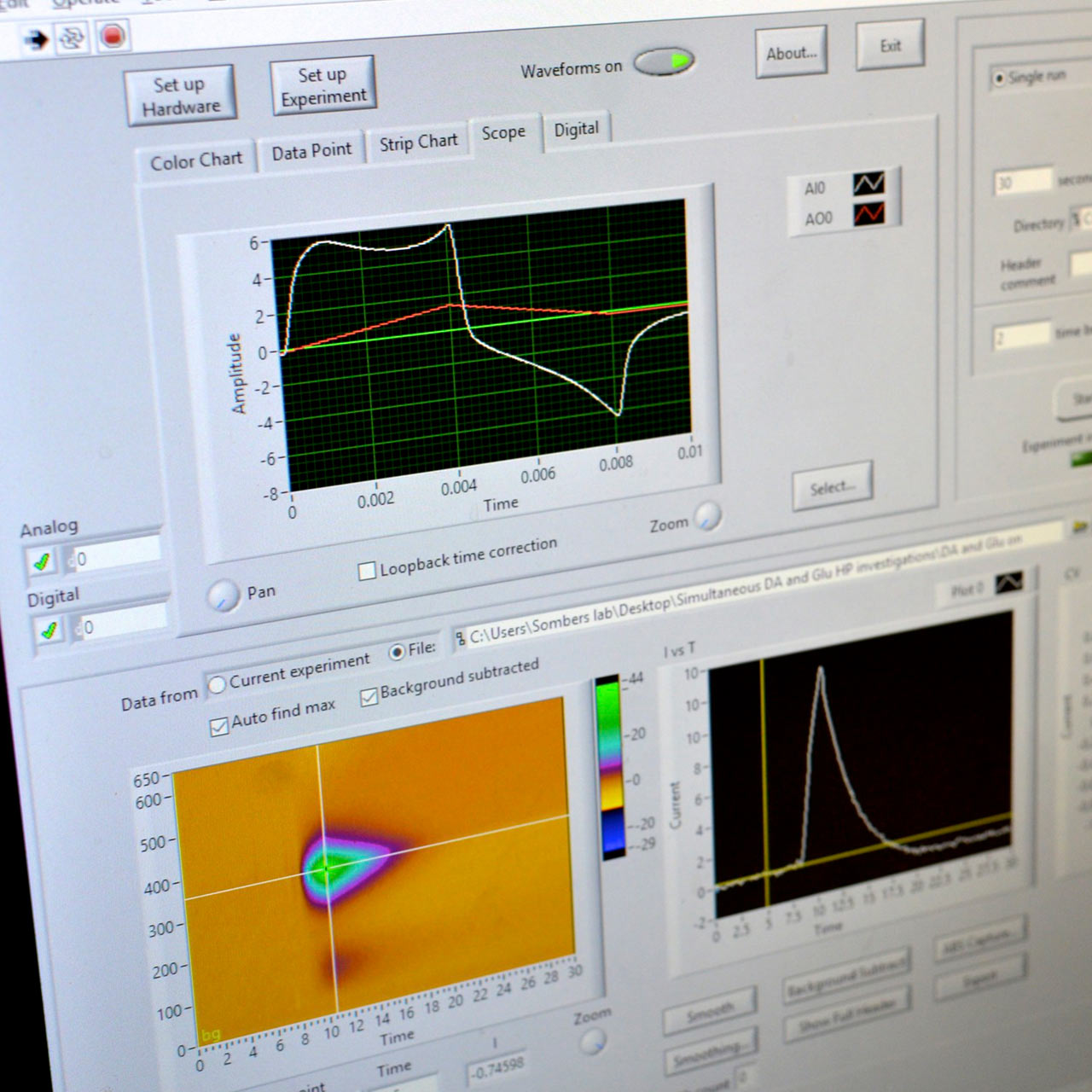
User interface of the HDCV software used to visualize fast scan cyclic voltammetry data collection in real time. There are three square regions depicting, respectively, the oscilloscope reading, the color plot, and the current versus time plot.
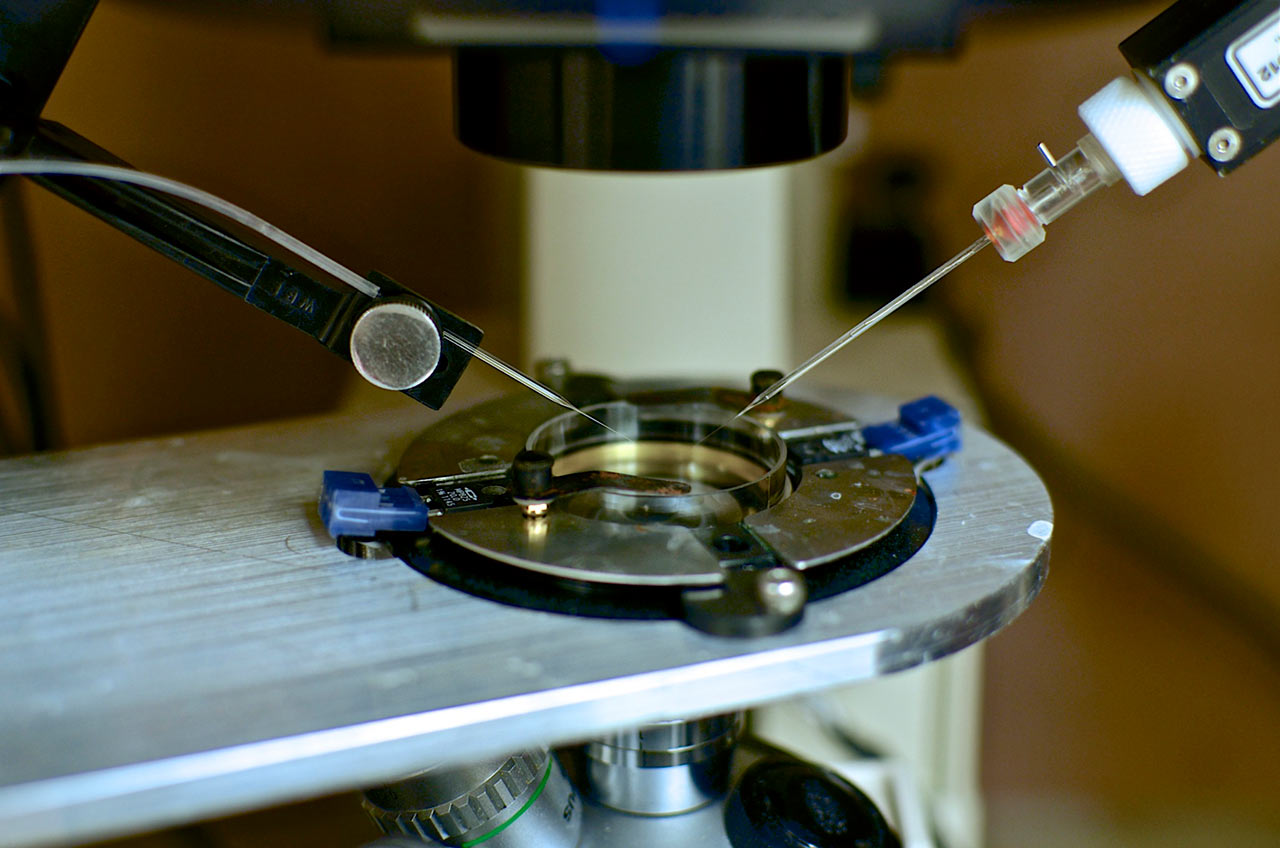
Cell rig with two electrodes, one on each side, pointing in and slightly downward toward a petri dish. The bottom of a microscope is just visible at the top of the image.
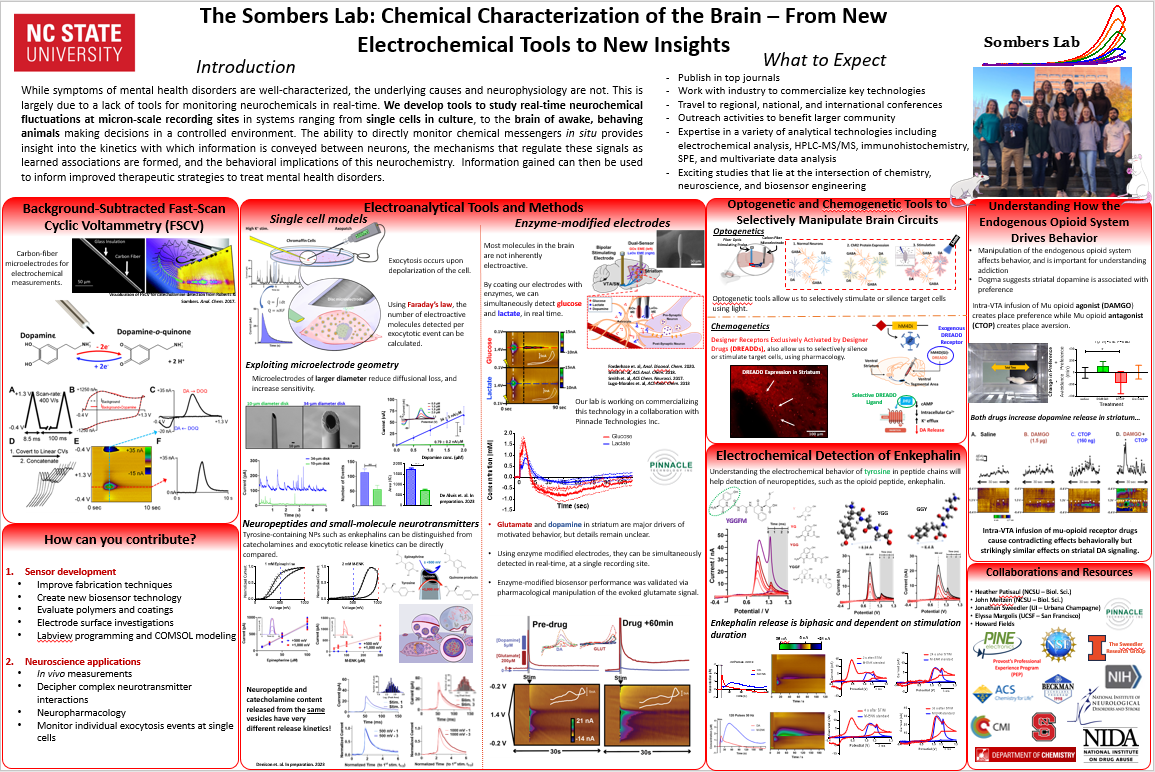
Research poster titled “The Sombers Lab: Chemical Characterization of the Brain - From New Electrochemical Tools to New Insights”. The top quarter of the poster has the NC State University logo, poster title, introduction, a section titled What to Expect, and an image of the lab at the time that the poster was printed. The bottom three quarters of the poster show a variety of data primarily including SEM images, color plots, and diagrams. The individual sections are titled 1. Background-subtracted fast-scan cyclic voltammetry (FSCV). 2. How can you contribute? 3. Electroanalytical Tools and Methods. 4. Optogenetic and Chemogenetic Tools to Selectively Manipulate Brain Circuits. 5. Electrochemical Detection of Enkephalin. Understanding How the Endogenous Opioid System Drives Behavior. 6. Collaborations and Resources.